How Ecommerce Stores can Save $600+/mo Replacing Ahrefs, Hunter, and Lemlist with One Link Building Tool
Your store runs category page link campaigns. You open Ahrefs to find backlink gaps, export to a spreadsheet, upload domains to Hunter.io for contact emails.
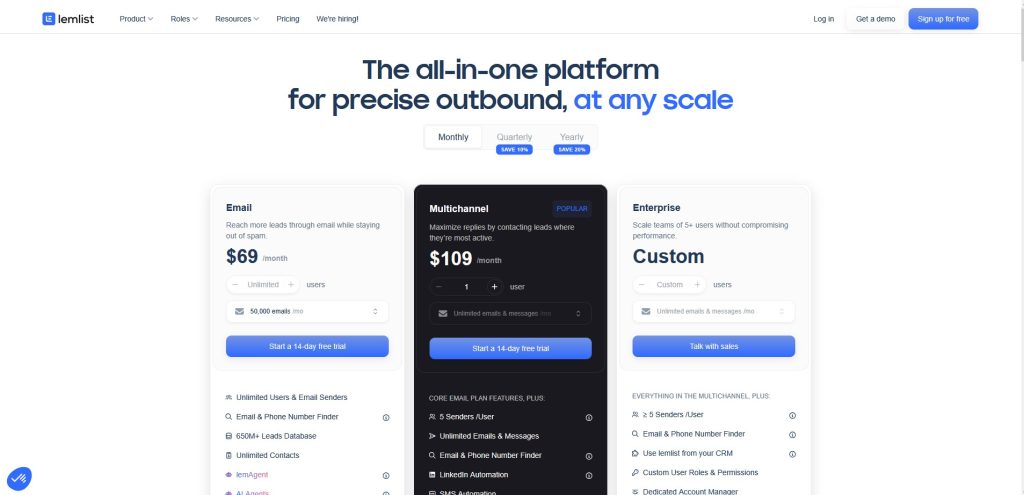
Then import those contacts into Lemlist for outreach sequences. Three tools, three logins, three invoices and $242-$748+ per month before a single link goes live.
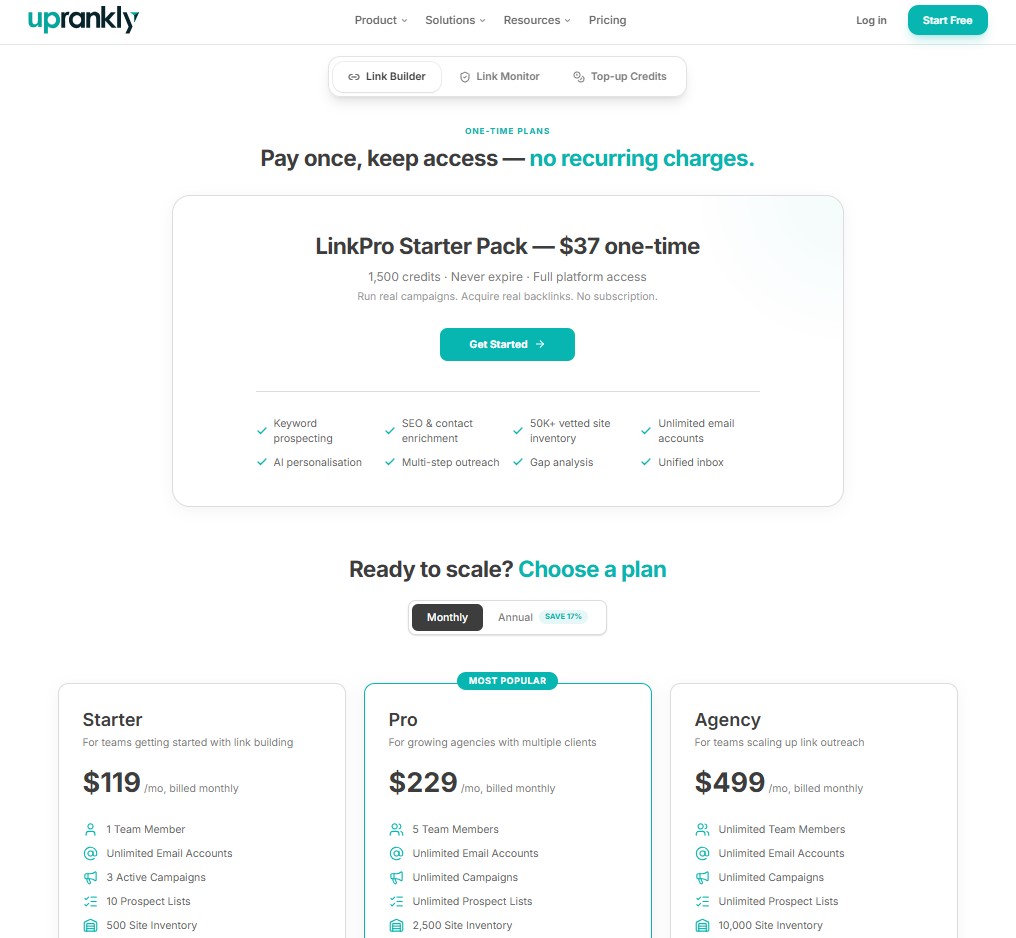
Uprankly Link Builder covers the same ecommerce link building pipeline for $119/mo (min.): gap analysis, prospecting, contact enrichment, outreach, tracking, and monitoring in one workspace.
This guide walks through the ecommerce-specific workflow, category page gap analysis, niche-relevant prospecting, product-context outreach and shows exactly where you save money and where you don’t.
For the general version of this breakdown (not ecommerce-specific), see How to Replace Ahrefs, Hunter, and Lemlist With One Link Building Tool.
Why Do Ecommerce Stores Use Ahrefs, Hunter.io and Lemlist?
Hundreds of ecommerce stores use Ahrefs for finding which sites link to competing category pages. They use Lemlist to email blog editors about resource page placements. The ecommerce use case is narrow, and that’s exactly why the three-tool stack is overpriced for stores.
The typical ecommerce link building workflow
Here’s what a category page link campaign looks like with the standard stack:
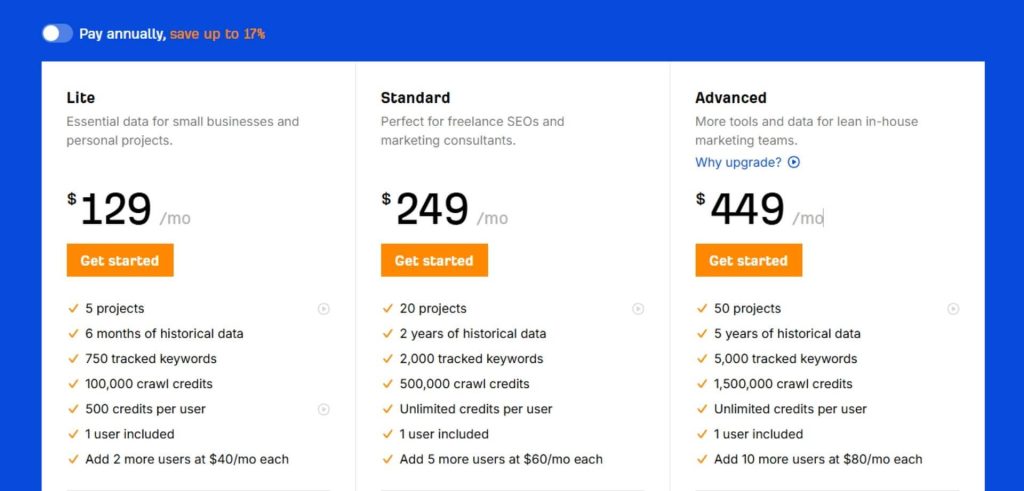
- Ahrefs ($129-449/mo): Paste a competitor’s category URL into Site Explorer. Export their backlink profile. Filter for do-follow links from DR 30+ sites. You now have a prospect list in a CSV.
- Hunter.io ($34-209/mo): Upload those domains to find editor and webmaster emails. Download the enriched list. Some domains return nothing and you lose 20-40% of prospects here.
- Lemlist ($69-109/mo): Import the contact list. Build a sequence. Write a generic pitch. Hit send. Check replies in Lemlist, but go back to Ahrefs to check if the link actually went live.
Three tabs. Two exports. One import. No tracking of whether links stick.
Why the Ahrefs, Hunter and Lemlist Tool Stack Hurts Ecommerce Stores more than Agencies
Agencies spread tool costs across clients. A solo store owner or small ecommerce team absorbs the full stack cost for one site.
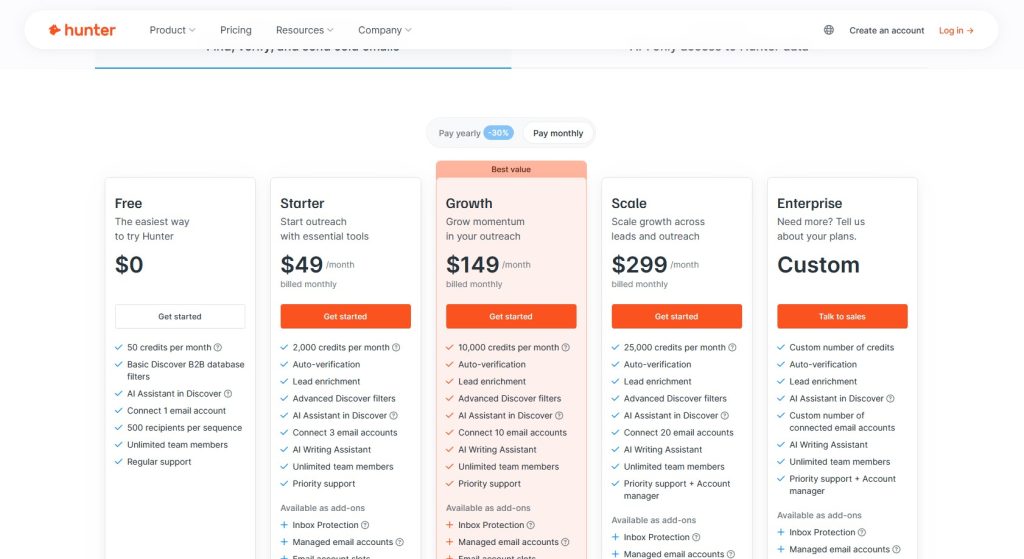
You’re paying $149/mo for Ahrefs Standard, but you only run Site Explorer on category pages once or twice a month. Hunter charges you $49/mo for 2,000 credits per month, but a typical category campaign needs 200-400 lookups. You’re paying for capacity you don’t use.
Ecommerce Cost Calculation: Three Tools vs. Uprankly Link Builder
Here’s what each team size actually pays with ecommerce-specific usage in mind.
| Team type | Ahrefs | Hunter.io | Lemlist | 3-tool total | Uprankly (Link Builder + Link Planner) |
|---|---|---|---|---|---|
| Solo store owner (1-2 campaigns/mo) | $129 (Lite) | $44 (Starter) | $69 (Email Starter) | $242/mo | $119/mo (Link Planner free) |
| Small ecommerce team (3-5 campaigns/mo) | $249 (Standard) | $149 (Growth) | $109 (Multichannel) | $507/mo | $119/mo |
| Agency managing 5+ stores | $449 (Advanced) | $299 (Scale) | Custom | $748+/mo | $119/mo |
Uprankly’s pricing doesn’t scale by seat count. You will get unlimited team seats and unlimited email accounts. A solo founder and a 10-person agency team pay the same $119/mo. Lemlist alone charges per seat, add two outreach specialists and your Lemlist bill doubles.
There’s also a $37 one-time starter pack to run one full campaign before committing monthly.
Annual Savings for a typical ecommerce team
A small ecommerce team on the mid-tier stack pays $242/mo (min.), or $2,904/year (min.). With Uprankly at $119/mo, that’s $1,428/year.
Annual savings: $1,476 (minimum). That’s enough to buy 10-15 high-quality guest post placements or fund three months of content production.
Ecommerce Link Building Workflow in Uprankly Link Builder
Here’s how category page link campaigns run inside Uprankly, step by step.
Step 1: Category Page Gap Analysis (replaces Ahrefs Site Explorer)
Start with Link Planner, it’s free. Paste your competitor’s category URL. Link Planner shows where they have backlinks that you don’t. Uprankly Link Planner replaces the Ahrefs workflow of Site Explorer, backlink export, and manual filtering.
For example, if you sell running shoes and your competitor’s /running-shoes category has links from 45 sites that yours doesn’t, Link Planner shows you those 45 gaps ranked by domain authority.
You’re not crawling the entire web. You’re answering one specific question: which sites link to their category page but not yours? For ecommerce category campaigns, that’s all you need from Ahrefs.
Step 2: Prospect Niche-relevant Sites (Replaces Ahrefs Content Explorer)
Uprankly Link Builder has a database of 70,000+ vetted sites with DR, traffic, niche, and contact data. Filter by niche (fashion, electronics, home goods, fitness, etc. whatever your store sells) and authority range.
For ecommerce campaigns, filter prospects by:
- Niche relevance: A link from a running blog to your running shoes category is worth more than a link from a general marketing site
- DR range: Aim for DR 30-60 for consistent results. DR 70+ sites rarely link to product categories
- Traffic: Sites with actual readers, not empty domains
No export needed. Your prospect list lives in the same workspace as your outreach.
Step 3: Enrich Contacts (Replaces Hunter.io)
Click enrich on any prospect in Link Builder. The verified email appears on the prospect card. No separate tool. No CSV upload. No waiting for Hunter credits to refresh.
For ecommerce outreach, you need the right contact, usually an editor, content manager, or resource page owner. Link Builder’s enrichment targets editorial contacts, not generic info@ addresses.
Step 4: Outreach with product and category context (replaces Lemlist)
Build your sequence in Link Builder. The AI opener generates a personalized first line based on the prospect’s site, recent content, and niche, not a generic “I noticed your site” template.
Ecommerce-specific context matters here. A pitch for a running shoes category link should reference the prospect’s existing content about running gear, not just say “we have a relevant resource.” Link Builder pulls prospect data into the opener so each pitch feels specific.
Example sequence for a category page campaign:
- Email 1: Personalized opener + category page as a resource fit
- Email 2 (3 days later): Short follow-up with a specific section of the page that would benefit their readers
- Email 3 (5 days later): Final nudge, different angle (seasonal relevance, updated data, exclusive product info)
Step 5: Track Replies and Link Placements
Replies come back to the same view. When someone says “sure, send me the details,” you don’t switch to another tool. When the link goes live, Link Builder logs it. You see the full path from prospect to placed link without leaving the platform.
Step 6: Monitor Links Long-term (replaces a 4th tool)
Uprankly Link Monitor watches every placed link 24/7. If a blog editor removes your link or changes it to nofollow, you get an alert. You can trigger recovery outreach from the same workspace.
With the three-tool stack, you’d need a fourth tool (Linkody, Monitor Backlinks, or manual Ahrefs checks) for this. Most ecommerce teams skip it entirely and lose links without knowing.
What You Lose Replacing Ahrefs, Hunter and Lemlist to One Link Building Tool
Switching tools isn’t free. Here’s what Uprankly doesn’t cover for ecommerce stores.
Ahrefs features you’ll still want
- Keyword research for product pages. Finding which product keywords to target, checking search volume, and running content gaps at the keyword level. Uprankly doesn’t do keyword research. If you optimize product page titles and descriptions with Ahrefs data, keep it.
- Technical site audit. Crawling your store for broken links, duplicate content, thin pages, and crawl errors. This matters for stores with thousands of SKUs. Different tool category entirely.
- Rank tracking. Monitoring keyword positions over time. Uprankly tracks links, not rankings.
- Full backlink index. Ahrefs crawls billions of pages. Uprankly has a curated database of 70,000+ sites built for outreach prospecting. If you audit backlink profiles for clients or do deep competitor research beyond gap analysis, Ahrefs’ index is broader.
The honest recommendation: If your store uses Ahrefs only for category page link prospecting, you can cancel it. If you also rely on it for keyword research, site audit, or rank tracking, drop to Ahrefs Lite ($149/mo) and use Uprankly for the link building pipeline. That still saves you Hunter + Lemlist costs: $113-299+/mo.
Hunter.io features you’ll still want
If your store’s marketing team uses Hunter for cold email prospecting, influencer outreach, or PR pitching outside of link building, keep a separate Hunter subscription for those teams. Uprankly’s enrichment is built for link building contacts specifically.
For most ecommerce stores where the only outreach is link building? Cancel Hunter entirely.
Lemlist features you’ll still want
Lemlist’s LinkedIn steps, phone call integration, and multichannel sequences don’t exist in Uprankly. If your store runs DTC outreach campaigns that mix email with LinkedIn touchpoints, Lemlist does things Uprankly doesn’t.
For email-based link building outreach which is 95% of ecommerce link campaigns Uprankly is a full replacement.
How Much Ecommerce Teams can Save Switching to Uprankly Link Builder from Ahrefs, Hunter and Lemlist
Monthly savings for ecommerce teams like solo store owners can save $123, small teams savings will be $388, and agencies can keep $629+ more each month.
Solo Shopify Store Owner
You run 1-2 category link campaigns per month alongside everything else, product sourcing, ads, customer service. You don’t need Ahrefs Standard. You don’t need Hunter Growth. You need to find 50-100 prospects, send pitches, and track results.
| Cost Comparison | Ahrefs + Hunter + Lemlist | Uprankly Link Builder | Savings |
|---|---|---|---|
| Monthly cost | $242/mo | $119/mo | $123/mo |
| Annual cost | $2,904/yr | $1,428/yr | $1476/yr |
| Tools required | 3 tools | 1 tool | 2 fewer tools |
| Logins | 3 | 1 | 2 fewer logins |
| Link monitoring | Separate tool | Included | Included |
Small Ecommerce Team (2-3 people)
Your SEO person runs link campaigns, your content person writes outreach templates, and your manager reviews reports. With the old stack, Lemlist charges per seat. Hunter charges by volume.
| Cost Comparison | Ahrefs + Hunter + Lemlist | Uprankly Link Builder | Savings |
|---|---|---|---|
| Monthly cost | $507/mo | $119/mo | $388/mo |
| Annual cost | $6,084/yr | $1,428/yr | $4,656/yr |
| Team seats | Paid per tool | Unlimited | No seat fees |
| Tools used | 3 | 1 | 2 fewer tools |
| Reporting | 3 separate dashboards | One platform | Unified reporting |
Agency Managing Multiple Ecommerce Stores
You run category page campaigns for 5-10 clients. Each client has different niches, different category targets, different DR preferences. With the old stack, you’re on Ahrefs Advanced, Hunter Enterprise, and Lemlist Scale with multiple seats.
| Cost Comparison | Ahrefs + Hunter + Lemlist | Uprankly Link Builder | Savings |
|---|---|---|---|
| Monthly cost | $748+/mo | $119/mo | $629/mo |
| Annual cost | $8,976+/yr | $1,428/yr | $7,548/yr |
| Client reporting | Google Sheets + slide decks | Client portal + white-label reports | Built in |
| Tools used | 3 platforms + multiple seats | 1 platform | Consolidated |
| Client management | Separate workflows | Centralized | Simpler workflow |
For more on running multi-store campaigns, see how agencies manage multi-client link building campaigns.
How to Test the Switch to Uprankly Link Builder without Risk
Don’t cancel everything at once. Run one campaign in parallel.
Week 1: Grab the $37 starter pack. Pick one category page campaign. Import your current prospect list or use Link Planner to generate a new one.
Week 2: Run the campaign through Uprankly while your old tools stay active. Send outreach, track replies, monitor placements.
Week 3: Compare results. Response rates, emails found, links placed, time spent per campaign. If Uprankly matches or beats your old stack on the metrics that matter, schedule your cancellations.
Week 4: Cancel Hunter and Lemlist at their next renewal. For Ahrefs, downgrade to Lite if you still need keyword research. Drop it entirely if category page gap analysis was your only use case.
How Uprankly Link Builder Connects to Your Ecommerce SEO
Replacing your tool stack is one piece. Here’s how it fits with the rest of your ecommerce link building strategy:
- Point links at category pages, not SKUs. Product URLs die when items sell out. Category pages are permanent. Read the full breakdown: Point Backlinks at Category Pages, Not SKUs.
- Track the CPA impact. Backlinks to category pages lift organic rankings, which improves your Quality Score on the same queries in Google Ads. That lowers your paid CPA. See how this works: How SEO Links Lower Your Google Ads CPA in Ecommerce.
- Use the right tactics for 2026. Category page outreach, supplier links, and product roundup placements still work. PBNs and directory spam don’t. Full guide: Ecommerce Link Building in 2026: What Works vs. What Fails.
- Build the full workflow. For a complete ecommerce link building process from strategy to execution, see our Link Building for Ecommerce guide.
FAQ
Can Link Planner really replace Ahrefs for ecommerce link prospecting?
Link Planner runs competitor backlink gap analysis for free. Paste a competitor’s category URL and see where they have links that you don’t. For the specific job of finding category page link opportunities, yes, it replaces Ahrefs workflow. It doesn’t replace keyword research, site audit, or rank tracking.
What if my store’s niche isn’t well covered in the 70,000-site database?
The database is curated for quality and real editorial traffic. Most ecommerce niches like fashion, electronics, home goods, fitness, beauty, food etc. have strong coverage. Start a campaign and check. If coverage is thin for a very niche vertical, you can supplement with manual prospecting and import those contacts into Link Builder.
Does Uprankly work for product page links too, or only category pages?
It works for any link target. Category pages are the recommended target because they’re permanent and pass authority to every product listed below them. But if you’re running a product launch campaign or seasonal promotion, you can run outreach to product-level URLs the same way.
How does the $37 starter pack work?
The $37 one-time starter pack gives you access to the full pipeline: prospect, enrich, outreach, and track. Run one real campaign. Compare your response rates, link placements, and time spent against your current three-tool workflow. If it works, move to the $119/mo plan. If not, you’re out $37.
What if I need Ahrefs for keyword research but not for link prospecting?
Keep Ahrefs Lite at $149/mo for keyword research, site audit, and rank tracking. Use Link Planner (free) for gap analysis and Link Builder ($119/mo) for the rest of the pipeline. Your total cost is $119/mo still less than Ahrefs Standard + Hunter Growth + Lemlist Pro ($249/mo). You save $123/mo and lose nothing.
Can my VA or freelancer use the same Uprankly account?
Yes. Unlimited team seats on every plan. Your VA, freelance outreach specialist, and ecommerce manager all work in one account. With Lemlist, each person needs their own seat at $69-109/mo each.
How long does it take to see link building results on category pages?
Outreach results start within 2-4 weeks (replies, placements). Rankings on category keywords typically start moving in 60-90 days after links begin going live. CPA impact from improved organic rankings takes 3-6 months to show clearly. The tool switch itself takes one campaign cycle (2-3 weeks) to validate.
What to Do Next
If your ecommerce store pays for Ahrefs, Hunter, and Lemlist mainly to run category page link campaigns, test the switch with one campaign.
Pick your highest-priority category page. Signup to use Link Planner and run a gap analysis against your top competitor’s equivalent category. Use Link Builder to filter prospects by niche, enrich contacts, and send outreach all without leaving the platform.
If the campaign performs, you’ll save $53-1,156/mo depending on your team size. If it doesn’t, your old tools are still running and you’ve lost one week.