9 Link Building Software for Ecommerce Stores in 2026
The best link building software for ecommerce in 2026 is Uprankly Link Builder ($119/mo) for full-pipeline outreach, Ahrefs ($129/mo) for backlink research, and Pitchbox ($300/mo) for enterprise-scale campaigns.
Ecommerce stores need tools that can target category pages (not product SKUs), find supplier link gaps, and track links that move the needle on organic revenue.
Most link building tools are built for agencies or SaaS companies. Ecommerce stores have different problems: product URLs go dead when SKUs sell out, seasonal campaigns need fast link velocity, and the pages that actually drive revenue are category pages sitting three clicks deep.
The right software handles these problems. The wrong one wastes your budget on links to pages that won’t exist next quarter.
Quick Shortlist
| Tool | Best For | Price (Starting) |
|---|---|---|
| Uprankly Link Builder | Full pipeline for ecommerce stores | $119/mo |
| Ahrefs | Backlink research + competitor analysis | $129/mo |
| Semrush | All-in-one SEO with link building | $139.95/mo |
| Pitchbox | Enterprise outreach at scale | $300/mo |
Why Ecommerce Link Building Is Different
Ecommerce link building is different because product URLs can disappear, revenue pages sit deep in the site, and seasonal campaigns require faster link acquisition.
Online stores face three problems below that SaaS or service businesses don’t.
Product URLs Die
When a SKU goes out of stock, the product page often gets removed or redirected. Any links pointing at that URL lose value. Smart ecommerce SEOs point links at category pages instead. Category pages stay live whether individual products come and go.
Revenue Pages Sit Deep in the Site
Your money pages are category and sub-category pages, not the homepage. You need software that helps you build links to pages like /womens-running-shoes or /organic-coffee-beans, not just your domain root.
Seasonal Spikes Need Speed
Black Friday, holiday season, back-to-school ecommerce stores can’t wait six months for links to kick in. You need prospecting and outreach tools that move fast enough to build links before peak buying windows.
Uprankly Link Planner can show you exactly which category pages your competitors have links to that you don’t. Start there, then run outreach with software that handles the whole pipeline.
Full Comparison Table of the Link Building Software for Ecommerce Stores
The comparison table below compares top link-building tools based on pricing, prospecting, outreach, monitoring, and ecommerce capabilities.
| Tool | Starting Price | Best For | Prospecting DB | Enrichment | Outreach | Link Tracking | AI Features | Per-Seat Pricing |
|---|---|---|---|---|---|---|---|---|
| Uprankly | $119/mo | Full-pipeline SaaS link building | 70,000+ vetted sites | Included | Included | Included + auto-recovery | AI openers | No |
| Pitchbox | $550/mo | Enterprise SaaS teams | No (BYOL) | Via integrations | Included | Included | Basic | Included |
| Respona | $99/mo | Content-led outreach | No (BYOL) | Credit-based | Included | Included | AI personalization | Included |
| BuzzStream | $24/mo | Relationship CRM | No (BYOL) | No | Included | Basic | No | Yes |
| Ahrefs | $129/mo | Backlink research | Research only | No | No | Research only | No | Yes |
| Semrush | $139.95/mo | All-in-one SEO suite | Keyword-based | No | Basic | Basic | No | Yes |
| Hunter.io | $49/mo | Contact finding | No | Yes | No | No | No | No |
| Majestic | $49.99/mo | Link quality scoring | No | No | No | Research only | No | Yes |
| LinkBuilder.io | ~$200/link | Managed link building | Managed | Managed | Managed | Reports | No | N/A |
The 9 Best Link Building Software for Ecommerce
This section describes the 9 best link building software options for ecommerce, focusing on how they help ecommerce teams build backlinks, manage outreach, and improve category page visibility.
1. Uprankly Link Builder — Best Full-Pipeline Tool for Online Stores
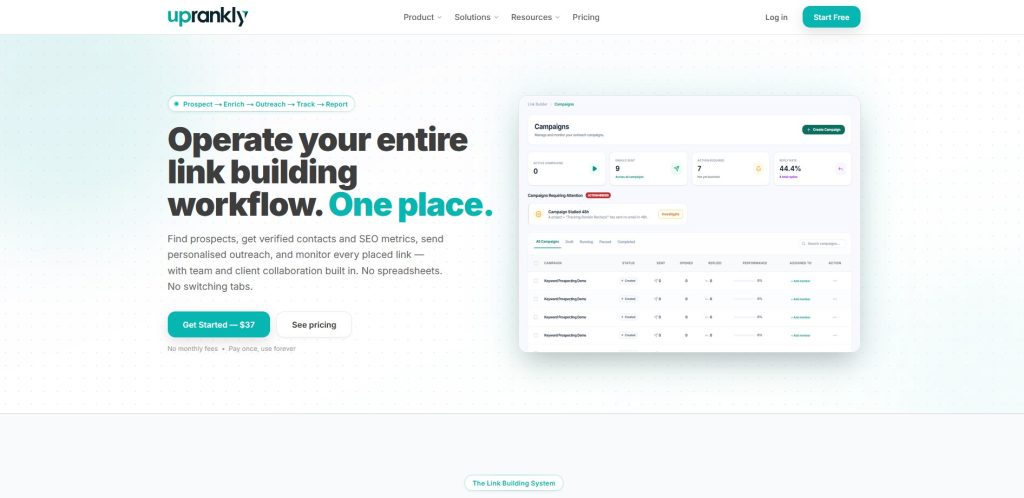
Uprankly Link Builder covers the entire link building workflow in one platform: prospecting, contact enrichment, AI-written openers, outreach, reply tracking, and reporting. It was built for teams that are tired of jumping between Ahrefs, Hunter, and a cold email tool.
What makes it good for ecommerce: Uprankly’s database of 70,000+ vetted sites lets you filter by niche and domain rating.
For an ecommerce store, that means you can find fashion bloggers, product review sites, or industry publications without scraping random domains. The AI opener feature reads the prospect’s recent content and writes a first line that isn’t a template.
The workflow for an ecommerce campaign looks like this: filter prospects by niche (e.g., “home and garden”), set a DR floor of 30, enrich the contacts, generate personalized openers, and send from your own inbox. Track replies and live links from the same dashboard.
Who it’s for: Ecommerce SEO teams and agencies managing store clients who want one tool instead of four.
Pros:
- Full pipeline from prospecting to reporting, no tool switching
- 70,000+ pre-vetted sites in the database
- AI-generated openers based on prospect content
- Unlimited team seats on all plans
- Link Monitor add-on for 24/7 backlink surveillance and auto-recovery
Cons:
- Database is curated, not a full web crawl like Ahrefs
- Newer product, smaller user community than established tools
- No on-page SEO features (it’s a link building tool, not a full SEO suite)
Pricing: $119/mo (Starter). No per-seat charges.
2. Ahrefs — Best for Backlink Research and Competitor Analysis
Ahrefs has the largest backlink index on the market. For ecommerce, its Site Explorer tool shows you where competitor stores are getting links, and Content Explorer finds pages in your niche that link out to similar products.
What makes it good for ecommerce: You can run a “link intersect” report to find sites linking to two or three competitor stores but not yours. That gives you a ready-made outreach list of sites already willing to link to ecommerce brands.
Who it’s for: SEO teams that need deep backlink data and are willing to handle outreach in a separate tool.
Pros:
- Largest backlink database (updated daily)
- Link intersect for competitor gap analysis
- Content Explorer finds linkable content opportunities
- Tracks keyword rankings alongside backlinks
Cons:
- No outreach features, you need a separate tool for email
- No contact enrichment, you’ll need Hunter or similar
- Gets expensive fast at higher tiers ($249/mo for Standard)
- Credit-based system limits how many reports you can pull
Pricing: $129/mo (Lite), $249/mo (Standard), $449/mo (Advanced).
3. Semrush Link Building Tool– Best All-in-One SEO Platform with Link Building
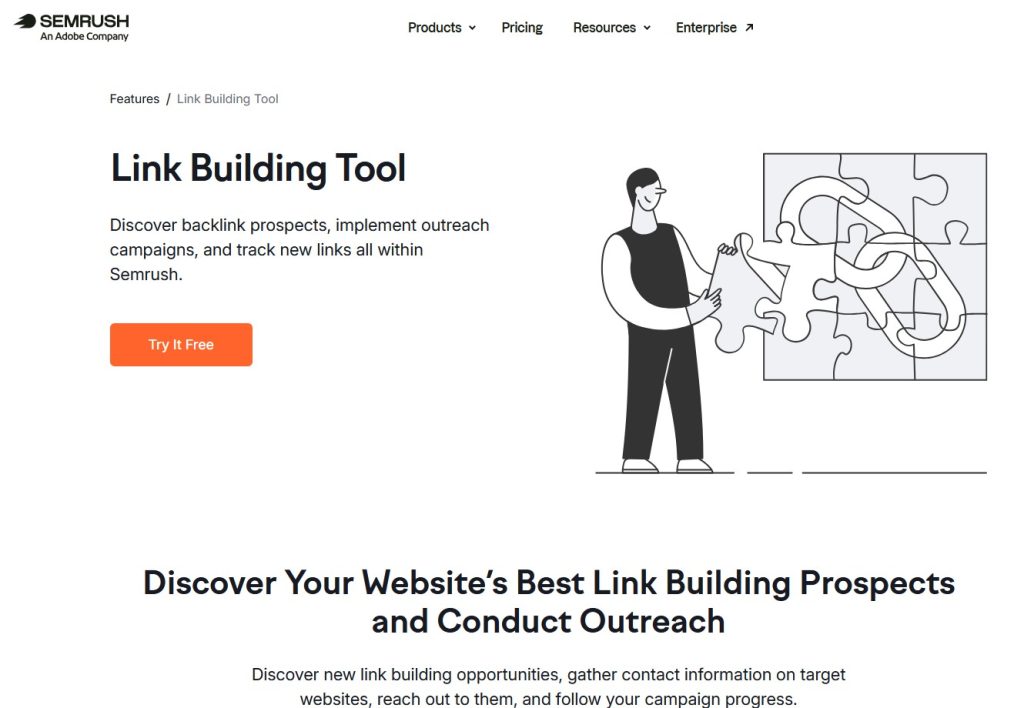
Semrush offers a Link Building Tool inside its broader SEO platform. It identifies prospects, checks their authority, and lets you run basic outreach from the dashboard.
What makes it good for ecommerce: The Backlink Gap tool compares your domain against up to four competitors and shows where they have links you don’t. Pair it with the Position Tracking tool to see which category pages need link support based on keyword rankings.
Who it’s for: Ecommerce teams already using Semrush for keyword research and site audits who want link building in the same platform.
Pros:
- Link building, keyword tracking, and site audit in one tool
- Backlink Gap tool for competitive analysis
- Large prospect database
- Good integration with Google Search Console
Cons:
- Link building features aren’t as deep as dedicated tools
- Outreach is basic compared to Pitchbox or Uprankly
- Expensive for teams ($249.95/mo for Guru, which is needed for multiple projects)
- Limited email sending, better for research than execution
Pricing: $139.95/mo (Pro), $249.95/mo (Guru), $499.95/mo (Business).
Read our SEMrush Link Building Tool Alternatives
4. Pitchbox — Best for Enterprise Ecommerce Teams
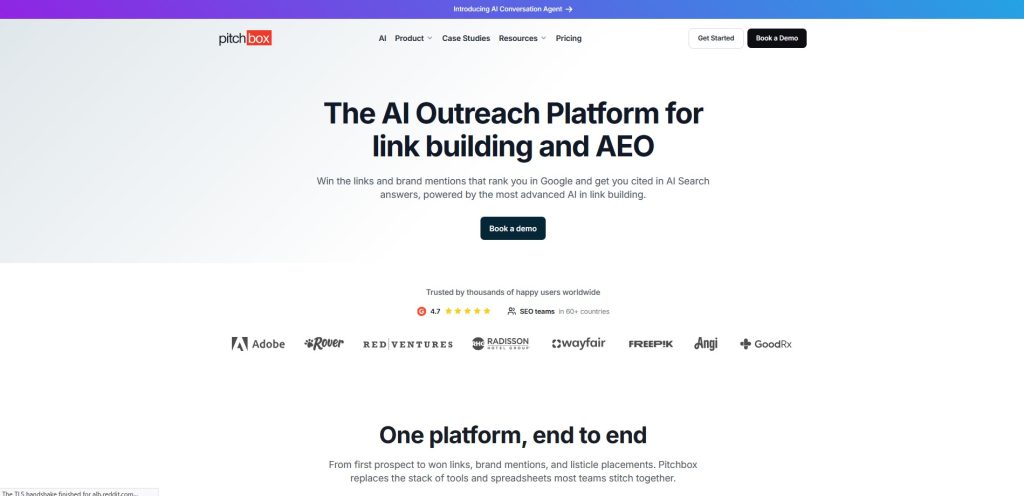
Pitchbox is an outreach-first platform built for agencies and enterprise teams running large-scale link campaigns. It connects to Ahrefs, Moz, and Majestic for prospect data, then handles sequencing, follow-ups, and relationship management.
What makes it good for ecommerce: If you’re a large store running 20+ outreach campaigns a month across different product categories, Pitchbox’s workflow automation saves hours. Custom sequences, automatic follow-ups, and team collaboration features work well at scale.
Who it’s for: Enterprise ecommerce brands and agencies with dedicated link building teams and big budgets.
Pros:
- Built for high-volume outreach
- Deep integrations with Ahrefs, Moz, Majestic
- Automatic follow-up sequences
- Team collaboration and campaign management
Cons:
- Starts at $300/mo, expensive for small stores
- No free trial (demo only)
- Requires separate tools for backlink data
- Steep learning curve
Pricing: $300/mo (Pro), $600/mo (Advanced), $1200/mo (Scale).
5. BuzzStream — Best for Relationship-First Link Building
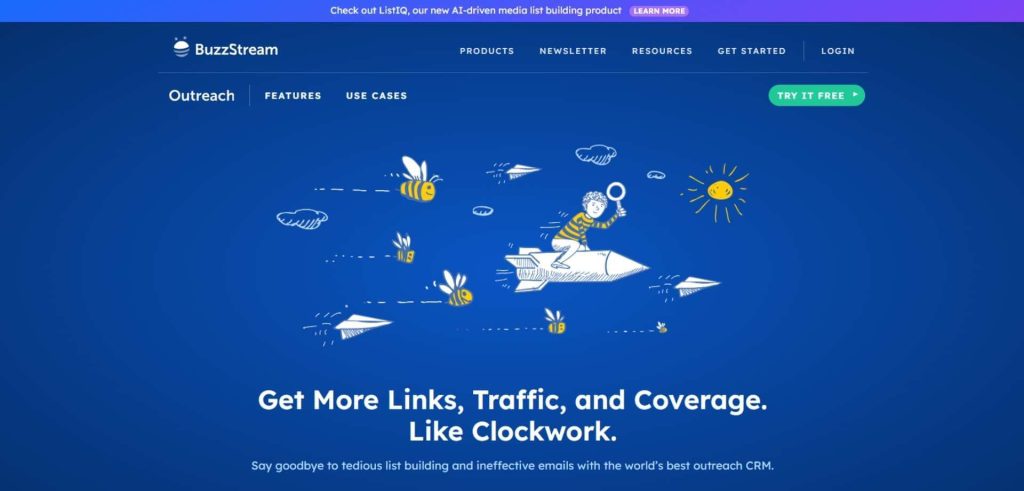
BuzzStream is a CRM-style outreach tool that tracks your relationships with bloggers, editors, and publishers. It keeps conversation history, tags contacts by topic, and manages follow-ups.
What makes it good for ecommerce: Product-focused stores often build ongoing relationships with review bloggers and gift guide editors. BuzzStream’s CRM approach keeps those relationships organized across seasonal campaigns.
Who it’s for: Ecommerce brands that rely on blogger outreach and want to manage long-term editorial relationships.
Pros:
- Strong CRM for contact and relationship management
- Link monitoring built in
- Affordable entry price
- Integrates with Google Sheets, Ahrefs, Majestic
Cons:
- Prospecting features are limited, you still need to find targets elsewhere
- Interface feels dated
- No AI personalization for outreach
- Email templates are basic
Pricing: $49/mo (Starter), $174/mo (Growth), $424/mo (Professional), $999/mo (Custom).
6. Respona — Best for AI-Powered Outreach Personalization
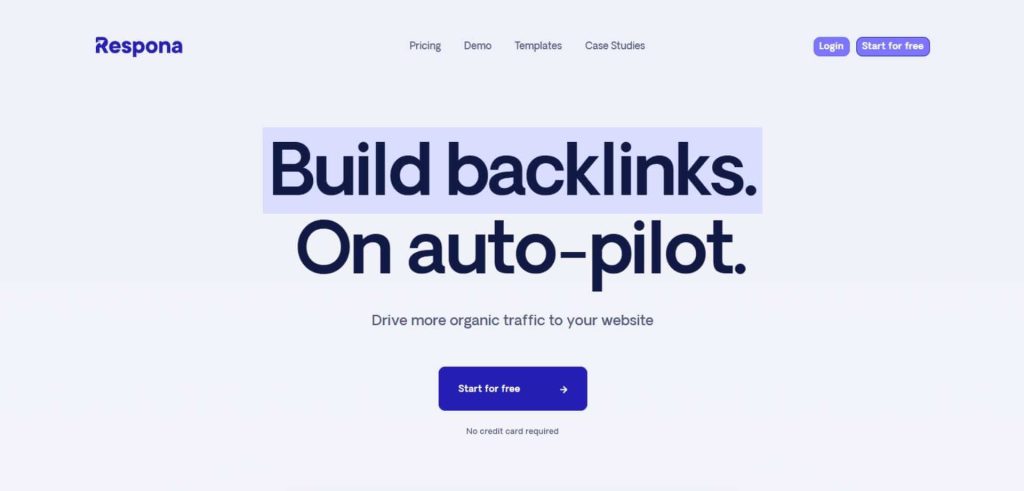
Respona connects prospect discovery with outreach and uses AI to personalize emails by pulling snippets from the prospect’s content and social profiles.
What makes it good for ecommerce: The AI reads a prospect’s blog post or product review and generates a relevant opening line. For ecommerce outreach, where editors get hundreds of generic product pitches, that personalization matters.
Who it’s for: Ecommerce marketers who want AI-assisted outreach without building prompts from scratch.
Pros:
- AI personalization reads prospect content
- Built-in prospect discovery
- Campaign automation with sequences
- Podcast outreach features
Cons:
- $100/mo entry point may not suit small stores
- Limited contact database compared to dedicated enrichment tools
- Learning curve on campaign setup
- Reporting is basic
Pricing: $100/mo (Starter), custom pricing for teams.
7. Hunter.io — Best for Finding Ecommerce Editor Contacts
Hunter.io is a contact-finding tool that verifies email addresses for outreach targets. It’s not a link building platform on its own, but it fills a critical gap when your other tools don’t include contact enrichment.
What makes it good for ecommerce: You’ve found 50 product review blogs in your niche using Ahrefs. Now you need email addresses. Hunter pulls verified contacts from those domains in seconds.
Who it’s for: Ecommerce teams using a research tool (Ahrefs/Semrush) that doesn’t include contact discovery.
Pros:
- High email accuracy rates
- Domain search finds all emails at a company
- Chrome extension for quick lookups
- API for bulk enrichment
Cons:
- Not a link building tool, email finding only
- Free tier is very limited (25 searches/mo)
- No outreach features
- Need to pair with another tool for the full workflow
Pricing: Free (50 credits/mo), $49/mo (Starter), $149/mo (Growth), $299/mo (Scale), custom pricing for enterprise team.
8. Linkody — Best for Ecommerce Backlink Monitoring
Linkody tracks your backlinks and alerts you when links are gained, lost, or changed. For ecommerce stores, where product pages get removed and redirected regularly, this monitoring catches broken link equity before it’s lost.
What makes it good for ecommerce: Set up alerts for your top category pages. When a referring site removes or changes a link, you get an email. Then you can reach out to recover it. That’s especially important during post-holiday content cleanup, when publishers purge gift guides and roundups.
Who it’s for: Ecommerce stores that have built links and need to protect them.
Pros:
- Real-time link monitoring with email alerts
- Disavow file management
- Competitor backlink tracking
- CSV export for reporting
Cons:
- No prospecting or outreach features
- Basic interface
- Limited free tier
- Doesn’t replace a full link building workflow tool
Pricing: $14.90/mo (Webmaster), $24.90/mo (Advanced), $49.90/mo (Pro), $99.90 (Agency), $153.90 (Agency XL).
For a more full-featured alternative, Uprankly Link Monitor offers 24/7 backlink surveillance with auto-recovery. Uprankly Link Monitor detects when a link drops and automatically triggers a recovery outreach sequence.
9. Majestic — Best for Trust Flow Analysis
Majestic is a backlink analysis tool known for its Trust Flow and Citation Flow metrics. These scores help ecommerce stores evaluate whether a link prospect is genuinely authoritative or just has a high domain rating from spammy links.
What makes it good for ecommerce: The Topical Trust Flow feature scores a site’s authority within specific categories (shopping, fashion, technology, food). That’s useful when you’re building links for a niche ecommerce store and need to know if a fashion blog actually has authority in fashion, not just general SEO metrics.
Who it’s for: Ecommerce SEOs who want deeper quality analysis of link prospects beyond standard DR/DA scores.
Pros:
- Trust Flow and Citation Flow metrics
- Topical Trust Flow by category
- Large historic backlink index
- Bulk backlink checker for large campaigns
Cons:
- Interface is dated and hard to learn
- No outreach or contact features
- Expensive for what you get at higher tiers
- Smaller active index than Ahrefs
Pricing: $49.99/mo (Lite), $99.99/mo (Pro), $399.99/mo (API).
How to Pick the Right Tool for Your Ecommerce Store
Choosing link building software depends on your store size, budget, and what you already have in your stack.
If you’re a small store ($0-5M revenue): Start with a tool that covers the full pipeline so you’re not paying for three or four separate subscriptions. Uprankly ($119/mo) or Postaga ($84/mo) give you prospecting through outreach in one place. Pair with Linkody ($14.90/mo) for monitoring if your tool doesn’t include it.
If you’re a mid-size store ($5-50M revenue): You probably already have Ahrefs or Semrush for keyword research. Add a dedicated outreach tool like Uprankly or Respona to handle the execution side. Use Uprankly Link Planner (free) to find the category page gaps your competitors are exploiting.
If you’re an enterprise store ($50M+ revenue): Pitchbox at $300/mo is built for teams running 20+ campaigns simultaneously. But consider whether Uprankly’s unlimited seats and lower price point could do the same job. The difference is mostly in workflow automation at very high volume.
The category page rule: Whatever tool you pick, point your backlinks at category pages, not product SKUs. Product pages die when items go out of stock. Category pages survive and keep accumulating authority. Use your chosen tool’s prospect filtering to find sites that already link to competitor category pages in your vertical.
Where Ecommerce Stores Should Point Backlinks
The fix is simple: Build links to category pages. /running-shoes stay active forever. /nike-air-max-95-black-size-11 has a shelf life.
Unfortunately, this is the most common mistake stores make with any link building tool. Online stores build links to individual product pages. Then the product sells out or gets discontinued. The URL gets redirected or deleted. The link equity evaporates.
Here’s a framework for deciding which pages to target:
| Page Type | Link Value | Lifespan | Priority |
|---|---|---|---|
| Category page (e.g., /running-shoes) | High | Permanent | Target first |
| Sub-category (e.g., /mens-running-shoes) | High | Permanent | Target second |
| Brand page (e.g., /brands/nike) | Medium | Permanent | Target third |
| Blog/guide content | Medium | Semi-permanent | Support content |
| Product page (e.g., /nike-air-max-95) | Low (high risk) | Temporary | Avoid for link building |
| Homepage | Medium | Permanent | Gets links naturally |
You can use Uprankly Link Planner to run a competitor gap analysis on your category pages. It shows you which domains link to competitor category pages but not yours, giving you a ready-made outreach target list.
FAQ
Is link building software worth it for small ecommerce stores?
Yes, if your store relies on organic traffic for revenue. A single tool like Uprankly ($119/mo) or Postaga ($84/mo) replaces the cost of juggling three or four separate subscriptions. If you’re spending less than $100/mo on SEO tools total, start with free options like Link Planner for competitor gap analysis and Hunter’s free tier for contact finding.
Should I build links to product pages or category pages?
Build links to category pages. Product URLs die when items go out of stock, which wastes whatever links pointed at them. Category pages stay live permanently and pass authority down to every product listed under them. See our guide on link building for ecommerce for the full strategy.
How many links does an ecommerce category page need to rank?
It depends on your niche and competition. Check what your top-ranking competitor has using Ahrefs or Semrush’s backlink reports. If their category page has 45 referring domains and yours has 8, you have a clear gap to close. Focus on quality over quantity, 10 links from relevant product review sites beat 50 links from random directories.
Can I automate ecommerce link building?
You can automate prospecting, contact finding, and follow-up sequences. You shouldn’t automate the actual pitch content or relationship building. Tools like Uprankly and Respona use AI to generate personalized openers, but a human should review each email before it sends. Fully automated outreach gets flagged as spam and damages your domain reputation.
What’s the difference between link building tools and link building services?
Link building tools are software you use to run campaigns yourself. Link building services are agencies that do the work for you. Tools cost $24-550/mo and give you control. Services cost $2,000-10,000/mo but handle everything. For most ecommerce stores with at least one person who can manage outreach, software is the better value. See our best link building tools roundup for more options.
How do I track ROI from link building on ecommerce?
Track three things: referring domains to your target category pages (using your link building tool’s dashboard or Ahrefs), organic traffic to those pages (Google Analytics), and revenue from organic search on those pages (GA4 ecommerce reports). Compare the monthly cost of your link building software against the revenue lift on the pages you’re building links to. Most stores see meaningful movement within 3-6 months of consistent link building to category pages.
What is Next?
So, if you are planning to build your link building plan for your ecommerce store, start with analyzing the seo links of the competitors.
In this case, sign up to Uprankly Link Planner, find your backlink gap.
Then start prospecting. Filter by niche and DR and traffic in Link Builder, enrich the contacts, and pitch the angles that work for category pages, resource page additions, broken link replacements, and seasonal guides.
Uprankly Link Builder covers the full pipeline at $119/mo with unlimited seats.