Best Link Building Tools for 2026 (10 Paid & Free Picks)
Link building teams juggle separate tools for research, outreach and tracking, which burns both budget and hours. The best link building tools cut that waste, either by covering the whole workflow or by doing one job exceptionally well.
On that basis, the best SEO link building tools are Uprankly Link Builder for the full workflow, Ahrefs for backlink research, Pitchbox for agency outreach at scale and SE Ranking for tight budgets.
Key Takeaways
- Uprankly is the best link building tool overall, with backlink gap analysis, AI-personalized outreach, 24/7 link monitoring, no per-seat fees and a $199 starter price.
- For deep backlink research, Ahrefs leads the market, while Pitchbox is built for agencies running high-volume outreach.
- Choose by your bottleneck: Select link building SEO tools that help you find sites, outreach tools raise reply rates, and monitoring tools protect the links you’ve earned.
- Avoid: tools that create links automatically. That’s a black-hat tactic and can lead to a Google penalty.
We compared 11 paid and free options by what each does best, what it costs and where it falls short.
Best Tools for Link Building Compared
The table below compares the top backlink building tools, highlighting their primary function and cost to help you compare your options easily.
| Tool | Best for | Link building job | Starting price | Free plan or trial | Ease of use |
| Uprankly | SEO Agencies and in-house teams | Backlink gap analysis, Email finding, AI-personalized outreach, campaign tracking and 24/7 link monitoring | $199/mo | Free Link Planner | Easy |
| Semrush | SEO and marketing teams | Research, outreach | $139.95/mo | Yes | Steep |
| Ahrefs | SEO specialists and agencies | Research, monitoring | $129/mo | Yes (with conditions) | Moderate |
| Moz Pro | Beginners and small teams | Research | $99/mo | 7-day free trial | Easy |
| Pitchbox | Large SEO agencies | Outreach | $300/mo | Yes | Steep |
| BuzzStream | Solo link builders | Outreach | $49/mo | 14-day free trial | Easy |
| Majestic | Technical SEOs and auditors | Research | $49.99/mo | Free Signup | Moderate |
| Qwoted | Founders and experts | Digital PR | N/A | Free plan | Easy |
| SE Ranking | Budget-conscious small businesses | Research, monitoring | $129/mo | Free trial | Easy |
| Google Alerts | Beginners with no budget | Prospecting | Free | Free | Very easy |
What Is a Link Building Tool?
A link building tool is software that helps you find, earn and keep backlinks from other websites. It replaces manual work like searching for sites, finding contact emails and checking whether links stay live.
What Link Building Tool does
- Research: Finds sites that link to your competitors but not to you.
- Prospecting: Filters those sites by niche, Domain Rating (DR) and traffic, then finds the right contact.
- Outreach: Sends personalized emails and follow-ups, and tracks every reply.
- Monitoring: Checks your placed links and alerts you when one is removed or changed.
What Link Building Tool is not
- Not a link seller: It helps you earn links. It does not place links for you.
- Not an auto-link builder: Tools that create links automatically are a black-hat tactic that can lead to a Google penalty.
- Not always a full SEO suite: Some tools, like Pitchbox or BuzzStream, cover only outreach and need a separate backlink database.
How We Chose These Link Builder Tools
We compared 11 tools across 4 categories on how well they help you earn links, not on how many features they list.
Criteria
We scored every tool on 6 criteria:
- Link building job: Which of the 4 stages it covers: research, prospecting, outreach or monitoring.
- Data quality: Size and freshness of the backlink data, and how well it filters out low-quality sites.
- Outreach strength: Personalization, follow-ups and safeguards against pitching the same site twice.
- Pricing: Starting price, from free to $300/mo across this list, plus free plans, trials and per-user costs.
- Ease of use: How long it takes to run a first campaign.
- User ratings: G2 scores backed by more than 6,400 reviews across the tools listed.
How we tested
- Shortlist: We started with 30 link building tools and cut the list to 11.
- Pricing check: We confirmed every price on the vendor’s own pricing page in %%currentmonth%%, 2026.
How we ranked
- Workflow coverage first: Tools that cover more of the 4 stages rank higher, because they save the time and cost of switching between tools.
- Best for each job: Within each category, the tool that does that one job best is listed first.
- Our own tool: Uprankly is our product. We judged it on the same criteria and list its cons as openly as every other tool’s.
What are the Best Link Building Tools for 2026 – (11 Paid & Free Picks)
The best backlink tools for 2026 are Uprankly, Ahrefs, Pitchbox, SE Ranking and Google Alerts, chosen from 11 paid and free options. Uprankly ranks first because it handles research, outreach and monitoring, while the others each lead one job.
Our analysis of the market reveals the top-performing tools designed to execute the link building strategies. We have categorized the top link building list of tools as follows:
1. Uprankly
Best for: SEO agencies and in-house teams that want research, outreach and link monitoring in one tool.
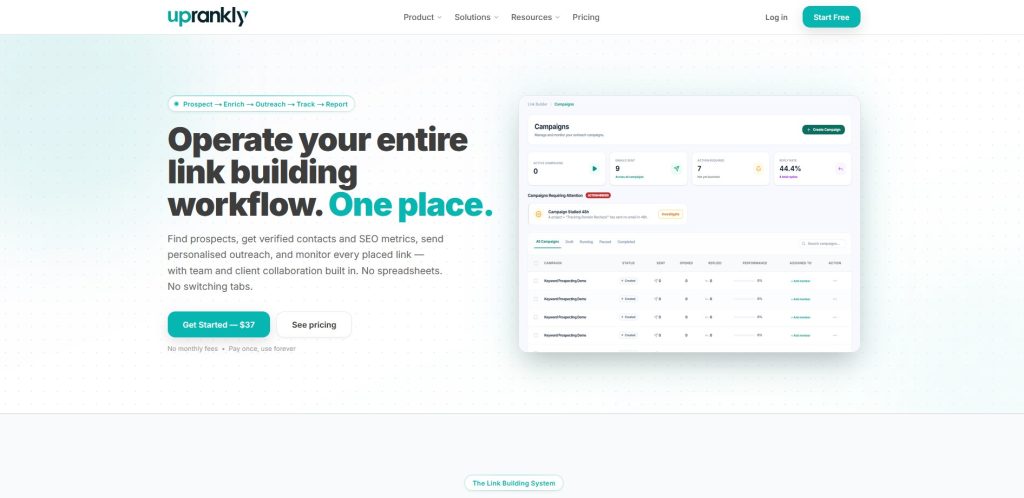
Uprankly is a link building platform with three products: Link Planner finds backlink gaps, Link Builder handles prospecting and outreach, and Link Monitor protects the links you earn.
You can run the entire link building campaign from one dashboard instead of paying for 3-5 separate tools.
Key Features
- Vetted Site Database: Find 70,000+ websites filtered by niche and domain rating, making it a link building database tool.
- Contact Enrichment: Automatically enrich prospect contact details and SEO data.
- AI-Personalized Outreach: Generate email openers based on each site’s recent content.
- Campaign Management: Send emails from your own inbox and track follow-ups.
- Performance Tracking: Monitor campaign progress and live link placements from one dashboard.
- Link Monitor: Track backlinks 24/7 and receive alerts when links disappear or anchor text changes.
- Automatic Link Recovery: Trigger recovery outreach when backlinks are lost or modified.
Pros
- One tool covers planning, outreach and monitoring
- No per-seat fees, so whole teams can work in it
- Monitoring and recovery are built in, not an add-on
Cons
- Newer brand, with fewer third-party reviews than Pitchbox or BuzzStream
- Its site database is smaller than Ahrefs’ full web index
Setup and learning curve: Quick to start; the free Link Planner gap analysis runs without a paid plan.
Pricing: From $199/mo (Starter)
2. Semrush
G2 Rating: 4.5 / 5 (2,835 reviews)
Best for: Marketers who need link building inside a full SEO and market research suite.
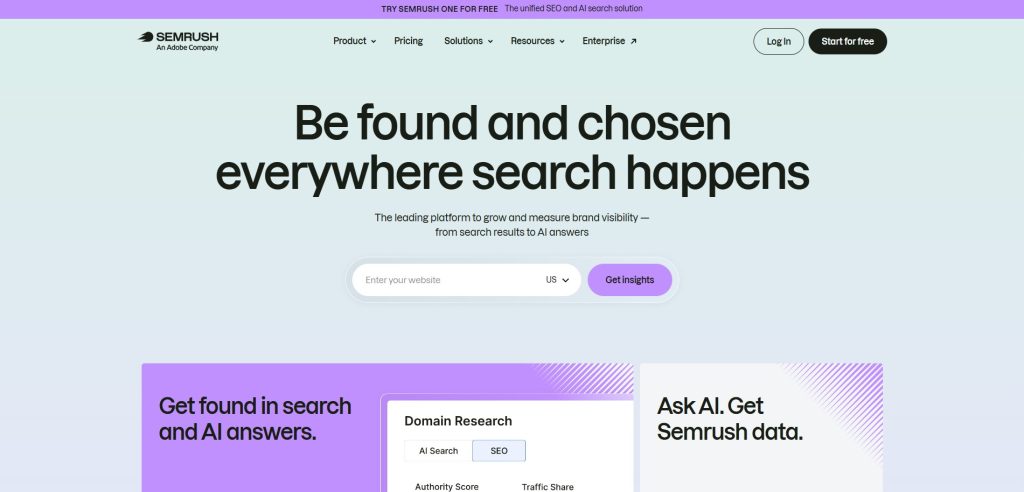
Semrush is an all-in-one SEO platform covering keywords, site audits, rank tracking and backlinks. Its Backlink Gap tool finds sites linking to competitors, and its Link Building Tool turns them into an outreach list.
Key features
- Backlink Gap: Shows sites that link to up to four competitors but not to you.
- Link Building Tool: Finds prospects, pulls contact details and tracks outreach status.
- Backlink Audit: Flags potentially toxic links and helps you build a disavow file.
- Backlink Analytics: Breaks down any domain’s referring domains, anchors and new or lost links.
Pros
- Link building sits next to keyword, audit and rank data
- Gap analysis feeds straight into outreach
- Large backlink database for competitor research
Cons
- Outreach is basic compared with dedicated tools like Pitchbox or Respona
- Expensive if you only need link building
Setup and learning curve: Steep. The number of features can overwhelm beginners.
Pricing: From $139.95/mo. Free trial available.
3. Ahrefs
G2 Rating: 4.5 / 5 (599 reviews)
Best for: SEOs who need deep backlink research and competitor link data.
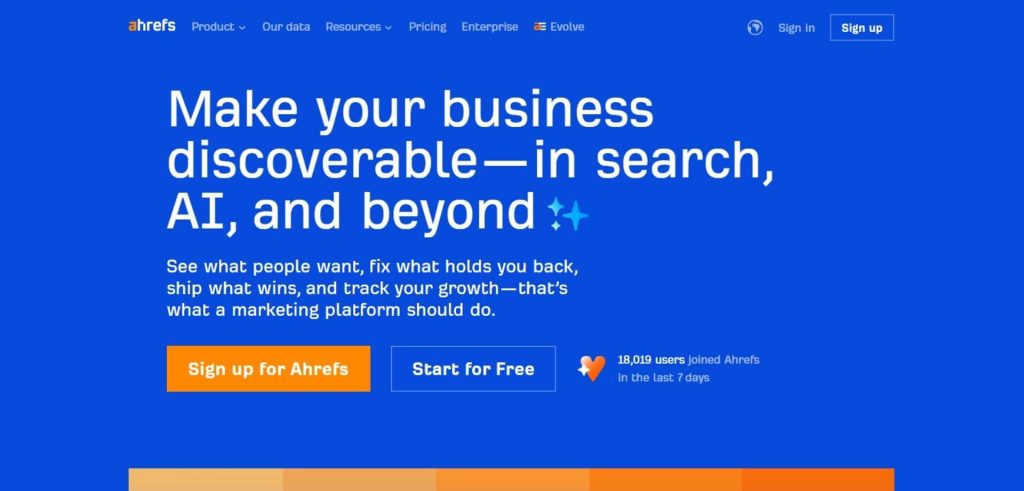
Ahrefs is an SEO platform best known for its backlink index, which it updates every 15 minutes. It shows who links to any site, which content earns the most links and where your competitors are getting links you don’t have.
Key features
- Site Explorer: Shows any domain’s referring domains, anchor text and new or lost links.
- Link Intersect: Finds sites that link to several competitors but not to you.
- Content Explorer: Surfaces the most-linked content in your niche, so you can plan linkable assets.
- Alerts: Emails you when your site or a tracked competitor gains or loses a backlink.
Pros
- One of the largest and freshest backlink indexes
- Strong gap analysis for finding prospects
- Content Explorer helps plan content that earns links
Cons
- No built-in outreach, so you need a separate tool to contact prospects
- Higher plans get expensive for small teams
Setup and learning curve: Moderate. Reports are clear, but getting the most from filters takes practice.
Pricing: From $129/mo (Lite). A limited free version is available through Ahrefs Webmaster Tools.
4. Moz Pro
G2 Rating: 4.3 / 5 (1,099 reviews)
Best for: Teams that judge link prospects by Domain Authority and want to track authority over time.

Moz Pro is an SEO suite built around Domain Authority (DA), the metric many SEOs use to rate how strong a site is. Its link tools help you research competitors and screen prospects before you reach out.
Key features
- Link Explorer: Shows a domain’s backlinks, linking domains and anchor text.
- Domain Authority and Spam Score: Rates how strong and how risky a prospect site is.
- Link Intersect: Compares your links with competitors’ to find sites you’re missing.
Pros
- DA is a widely recognized metric for qualifying prospects
- Spam Score helps you avoid risky sites
- Lower entry price than Semrush or Ahrefs
Cons
- Smaller backlink index that updates less often than Ahrefs’
- No built-in outreach
Setup and learning curve: Easy. The interface is simpler than most all-in-one suites.
Pricing: Standard: $99/mo ($79/mo when you pay yearly), Medium: $179/mo ($143/mo when you pay yearly), Large: $299/mo ($239/mo when you pay yearly).
5. Pitchbox
G2 Rating: 4.7 / 5 (97 reviews)
Best for: Agencies running high-volume outreach for many clients.
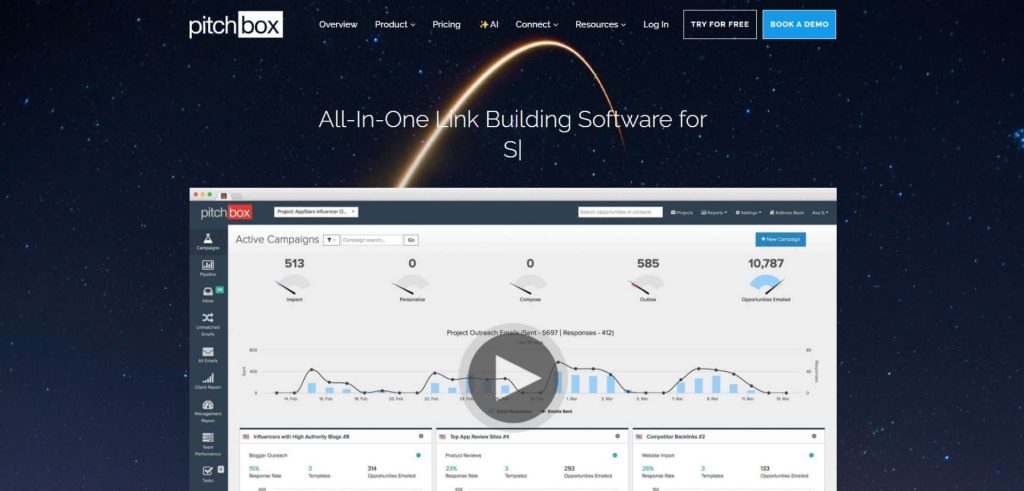
Pitchbox is an outreach platform built for link building teams. It pulls prospect data from Ahrefs and Semrush and automates follow-ups across large campaigns.
Key features
- SEO tool integrations: Pulls Ahrefs and Semrush metrics into each campaign so you can qualify prospects in one place.
- Automated follow-ups: Sends follow-up sequences to prospects who haven’t replied.
- Agency safeguards: Stops your team contacting the same site for different clients.
- Reporting: Tracks reply rates and placements per campaign and per team member.
Pros
- Built for agency-scale outreach
- Strong automation and follow-up control
- Prevents duplicate outreach across clients
Cons
- Needs a separate Ahrefs or Semrush subscription for backlink data
- Too complex and pricey for freelancers and small businesses
Setup and learning curve: Steep. Expect onboarding time before the first campaign runs smoothly.
Pricing: From $300/mo (Pro: 2 users, 2,000 outreach emails), or $210/mo billed annually. Advanced is $600/mo; Scale is $1,200/mo. Every plan needs a one-year commitment.
6. BuzzStream
G2 Rating: 4.2 / 5 (165 reviews)
Best for: Link builders and digital PR teams who manage long-term relationships with site owners.
BuzzStream is a CRM built for link building and digital PR. It keeps every contact, email and conversation in one place, so your team knows who has already been pitched and when.
Key features
- Relationship CRM: Stores contact details and the full communication history for every prospect.
- BuzzMarker extension: Pulls contact details and site metrics while you browse a prospect’s site.
- Team collaboration: Lets several people work on a campaign without pitching the same contact twice.
Pros
- Low entry price for solo link builders
- Clear contact history for long-term relationships
- Simple to use day to day
Cons
- No backlink data, so you need Ahrefs or a similar tool to find prospects
- Extra users add cost on every plan
Setup and learning curve: Easy. Most users can import contacts and start a campaign on day one.
Pricing: From $49/mo (Starter: 1 user, 500 contacts). Growth is $174/mo; Professional is $424/mo. Free trial available.
7. Majestic
G2 Rating: 4.3 / 5 (73 reviews)
Best for: Analysts who judge link quality by trust and study a site’s link history.
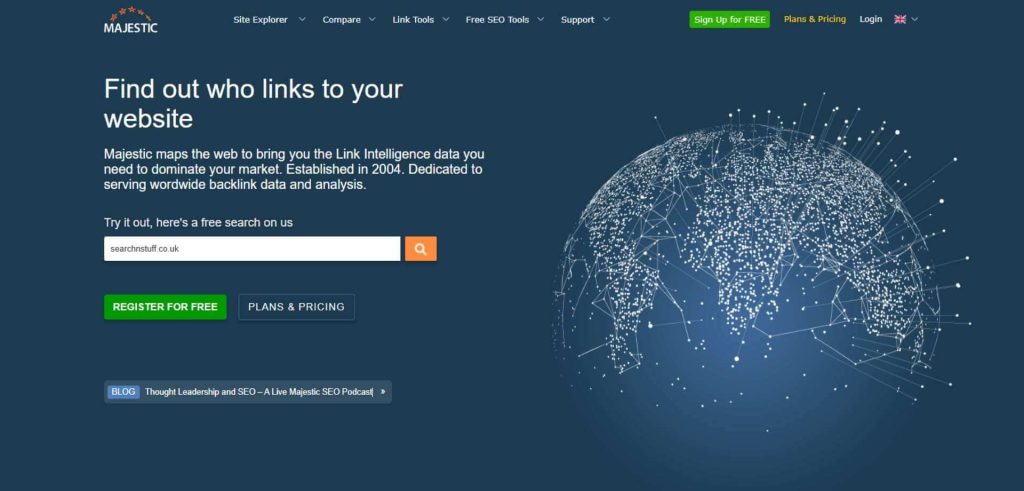
Majestic is a backlink analysis tool known for Trust Flow and Citation Flow, two metrics that score how trustworthy and influential a site’s links are. Its historic index goes back to 2006.
Key features
- Trust Flow and Citation Flow: Scores link quality and link volume separately.
- Historic Index: Shows a site’s link history back to 2006.
- Clique Hunter: Finds domains that link to several competitors.
Pros
- Trust-based metrics beyond Domain Authority
- Long link history for audits and research
- Lower entry price than most all-in-one suites
Cons
- Backlinks only: no keyword research, site audit or outreach
- Interface feels dated next to newer tools
Setup and learning curve: Moderate. The metrics are simple; reading the charts well takes practice.
Pricing: From $49.99/mo (Lite). Pro is $99.99/mo and adds the Historic Index and Clique Hunter.
8. Qwoted
G2 Rating: 4.6 / 5 (18 reviews)
Best for: Founders and subject experts who want links from major publications through digital PR.

Qwoted is a digital PR platform that connects journalists with verified expert sources. It uses AI to match your expert profile with relevant media requests, and each published quote can earn a high-authority link.
Key features
- Matched media requests: Sends you journalist queries that fit your expertise.
- Top-tier publications: Journalists from major outlets, where one quote can earn a high-DR link.
- Pitching dashboard: Keeps every pitch and journalist conversation in one place.
Pros
- Links from publications that are hard to reach with cold outreach
- Builds brand mentions as well as links
- Free plan to test it
Cons
- The free plan is very limited (2 pitches a month, with a 2-hour delay)
- Results depend on replying to requests fast and having real expertise
Setup and learning curve: Easy to join; the effort is in writing strong, fast pitches.
Pricing: Free (Basic: 2 pitches a month). Pro is $99/mo for 35 pitches; Teams is custom.
9. SE Ranking
G2 Rating: 4.8 / 5 (1,400 reviews)
Best for: Small businesses and agencies that want an all-in-one SEO suite at a lower price.
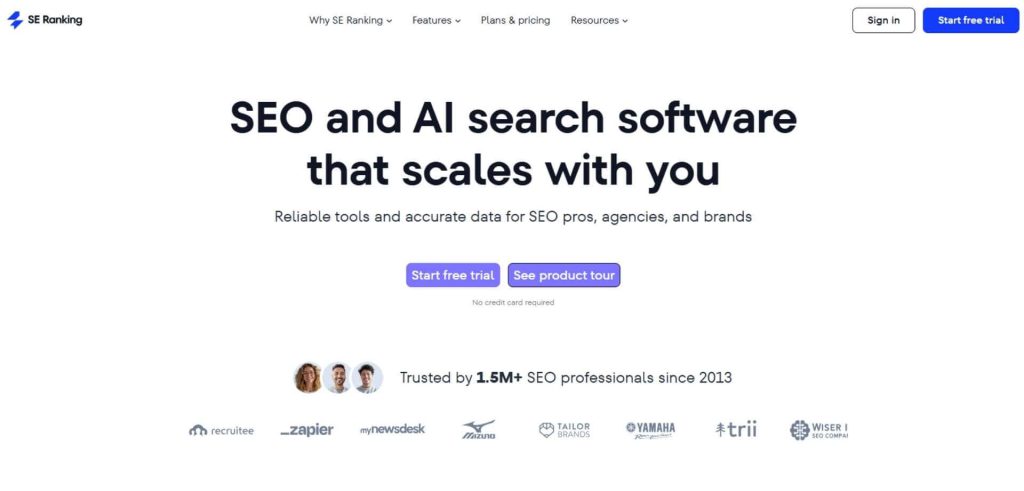
SE Ranking is an all-in-one SEO platform with backlink research, gap analysis and link monitoring. It covers most of what Semrush and Ahrefs do for link building at a lower starting price.
Key features
- Backlink Checker: Shows any domain’s backlinks with Domain Trust and a toxicity score.
- Backlink Gap Analyzer: Compares your domain with up to five competitors.
- Backlink Monitoring: Tracks your key backlinks and alerts you when one is lost.
Pros
- Lower price than Semrush or Ahrefs
- Research and monitoring in one tool
- Agency plans with more seats and projects
Cons
- Smaller backlink database than Ahrefs
- No built-in outreach
Setup and learning curve: Easy. A clean interface and a free trial with no credit card needed.
Pricing: From $129/mo (Core: 1 seat, 10 projects), or $103.20/mo billed annually. Growth is $279/mo. 14-day free trial, no credit card.
Best Free Link Building Tools
The top free link building tools include Google Alerts and Free Backlink Checker.
Paid platforms offer more power, but free tools provide the essential functions for core link building tasks. They handle basic backlink analysis, monitor brand mentions, and find prospecting opportunities using methods like Google Footprints at no cost.
10. Google Alerts
Best for: Beginners and small teams who want a free way to spot link opportunities.

Google Alerts is a free content monitoring service that finds organic link building opportunities. You can set up alerts for specific keywords to discover unlinked brand mentions, track competitor activity, and find sites that are looking for a site owner to contribute guest posts.
Key features
- Unlinked mention discovery: Finds pages that mention your brand but don’t link to you.
- Competitor mention tracking: Shows where competitors get coverage, so you can pitch the same sites.
- Guest post prospecting: Alerts for phrases like “write for us” plus your niche.
Pros
- Completely free
- Takes minutes to set up
- Good for finding unlinked brand mentions to reclaim
Cons
- Misses many mentions
- No SEO metrics, so you have to judge each site’s quality yourself
Setup and learning curve: Very easy. You can create your first alert in under five minutes.
Pricing: Free.
How to Choose Your Best-fit Link Building Software
You can choose your best-fit link building software by defining your link building strategy, then compare the features it needs. Finally, pick the tool that fits your budget.
Selecting the right link building software requires a clear process that we mentioned below. Your choice should align with your specific goals, your budget, and the features you need most.

Step 1: Define Your Link Building Strategy
Start by defining your primary approach, which you can learn about in our guide on link building strategy. This will determine which type of tool is the best fit for your needs. Ask yourself what you need to accomplish:
- Do you need to reverse-engineer competitor backlinks? An all-in-one platform with strong backlink analysis is essential for finding and replicating what works for top-ranking sites.
- Do you need to scale high-volume outreach? A specialized outreach platform is necessary for managing contact details, automating follow-ups, and tracking campaign performance.
- Do you need to build brand authority? A Digital PR tool is best for securing placements on high-DR websites and earning media mentions.
Step 2: Evaluate the Most Important Features
Your strategy will determine which software features are most important. Over half of digital marketers (52.3%) find link building to be the most challenging part of SEO, so focus on features that solve your biggest problems. (Source: Gael Breton)
- Backlink and Competitor Analysis: The best tools analyze a competitor’s backlink profile and help you find backlink opportunities. Look for reliable metrics like Ahrefs’ Domain Rating (DR), which 67% of marketers prioritize.
- Outreach Management: Traditional link outreach has an average success rate below 5%. However, a good tool improves this by managing contact details, automating follow-ups, and tracking your campaigns.
- Reporting and ROI: Over 52.9% of marketers find it hard to measure link building ROI. Choose a tool with clear reporting features, which is essential when you need to determine your link building campaign ROI.
Step 3: Consider Your Budget
Link building costs are rising. Your software budget should reflect the value it provides in terms of saved time and better client success.
An effective tool often costs less than the time required to do the same work manually. Many platforms offer free trials, which you should use to test the software and its data accuracy before you commit.
FAQs
What is the best link building tool for SEO agencies?
Uprankly is the best fit for most SEO agencies link building projects because it gives each client a separate workspace, white-label reports and no per-seat fees. Larger agencies sending thousands of outreach emails a month may also consider Pitchbox, though it needs a separate Ahrefs or Semrush subscription.
What is the best link building tool for in-house SEO teams?
In-house teams manage one site with limited time, so a single tool for research, outreach and monitoring saves the most effort, which is what Uprankly does. Teams already paying for Semrush or Ahrefs can add BuzzStream to manage relationships with site owners.
Are automated link building tools safe to use?
No. Tools that automate link building processes are unsafe and your website might get Google penalty if you use them to create backlinks. Software that automatically creates spammy links is a black-hat tactic. Google’s machine learning algorithms can easily detect these patterns, which can result in a severe penalty.
How much should I budget for link building tools?
A budget for link building tools can range from free to over $500 per month. Beginners can start with free tools, while a small business should budget around $100 for a good all-in-one platform like SE Ranking.
Can I do effective seo link building without paid tools?
Yes, but it requires significant manual effort. You can use free tools like Google Alerts for finding brand mentions and Google Search Console for data. Strategies like guest posting and reclaiming unlinked mentions are effective without paid software.
What is the best link building tool for SaaS companies?
Ahrefs is the strongest choice as a link building tool for SaaS companies that want to see where competitors earn links, such as comparison pages and integration directories. Pair it with Qwoted to win quotes in tech publications, which are hard to reach with cold outreach.
What is the best link building tool for freelancers on a budget?
BuzzStream’s Starter plan at $49/mo and Uprankly’s $199 starter price are the lowest-cost ways to run real outreach. Add Google Alerts and free backlink checkers to find prospects without another subscription.
How long does it take to see results from a link building tool?
Most teams land their first links within 2 to 4 weeks of starting outreach, but rankings usually take 3 to 6 months to move as Google finds and weighs those links. Results come faster on pages that already rank on page two, and slower in competitive niches.
What’s Next for Your Link Building Strategy?
The best link building tools are the ones that fit your strategy, so pick the one that fixes your biggest bottleneck.
Before outreach, use Uprankly Link Planner to run a free backlink gap analysis and see which opportunities will move your rankings most.
After links go live, Uprankly Link Monitor alerts you when one is removed, switched to nofollow or has its anchor changed, and sends a one-click recovery email. For the full process, follow our guide on how to build a link building plan.